


Last week like so many others I watched Ron Howard's Richard Avedon documentary on Netflix. If you're even remotely interested in photography, it's a must-see.
There’s no question that his large format portraits and fashion images (always photographed on a white background) are legendary and iconic, and helped define decades of culture from the 1950s into the 1990s.
What I found most interesting about the documentary were the parts of the story where you had to read between the lines a bit: the lifestyle of a photographer in those times, his turbulent life and relationships, his difficult temperament, the sacrifices made in his personal life as a result of his devotion to the craft.
But the part that really stuck out to me was his overall dissatisfaction with his commercial and fashion work, which led him to pursue his often criticized and poorly reviewed art projects.
When I was attending Ryerson University (now Toronto Metropolitan University) around 2007–2008, digital photography was becoming more common in professional image making. But in the canon of art school, large format film photography (think 4x5 cameras) was what everything was measured against. So much so that “should have shot 4x5” was a common phrase in critiques among students and teachers alike, often followed by a mention of Avedon’s work.
The year I graduated, after years of renovations, my alma mater launched The Image Centre, Canada’s leading institution dedicated to the exhibition, research and collecting of photography. And there, in the exact same space where I first used a 4x5 camera, coordinated with the release of this documentary, are exhibitions of Avedon’s photographs:
The day after watching the documentary, my girlfriend and I were downtown and checked out the exhibition Richard Avedon, Immortal, Portraits of aging, 1951-2004 at The Image Centre.
The exhibition is broken into two parts with the main gallery exhibiting nearly 100 portraits made between the early 1950s and 2004, featuring artists, writers, musicians, and cultural icons including Toni Morrison, Gabriel García Márquez, Duke Ellington, Ronald Reagan, the Duke and Duchess of Windsor, Patti Smith, Truman Capote, and the Dalai Lama. The other part located across the hall in the smaller gallery is a restaging (trigger warning) of his 1974 Museum of Modern Art exhibition of portraits of his father, throughout the last 9 years of his life. Both exhibitions confront our own mortality, but in very different ways.
While exploring the portraits of cultural icons in the main gallery I came around a corner and noticed this portrait of Italian film director Michelangelo Antonioni, photographed with his wife at his side:
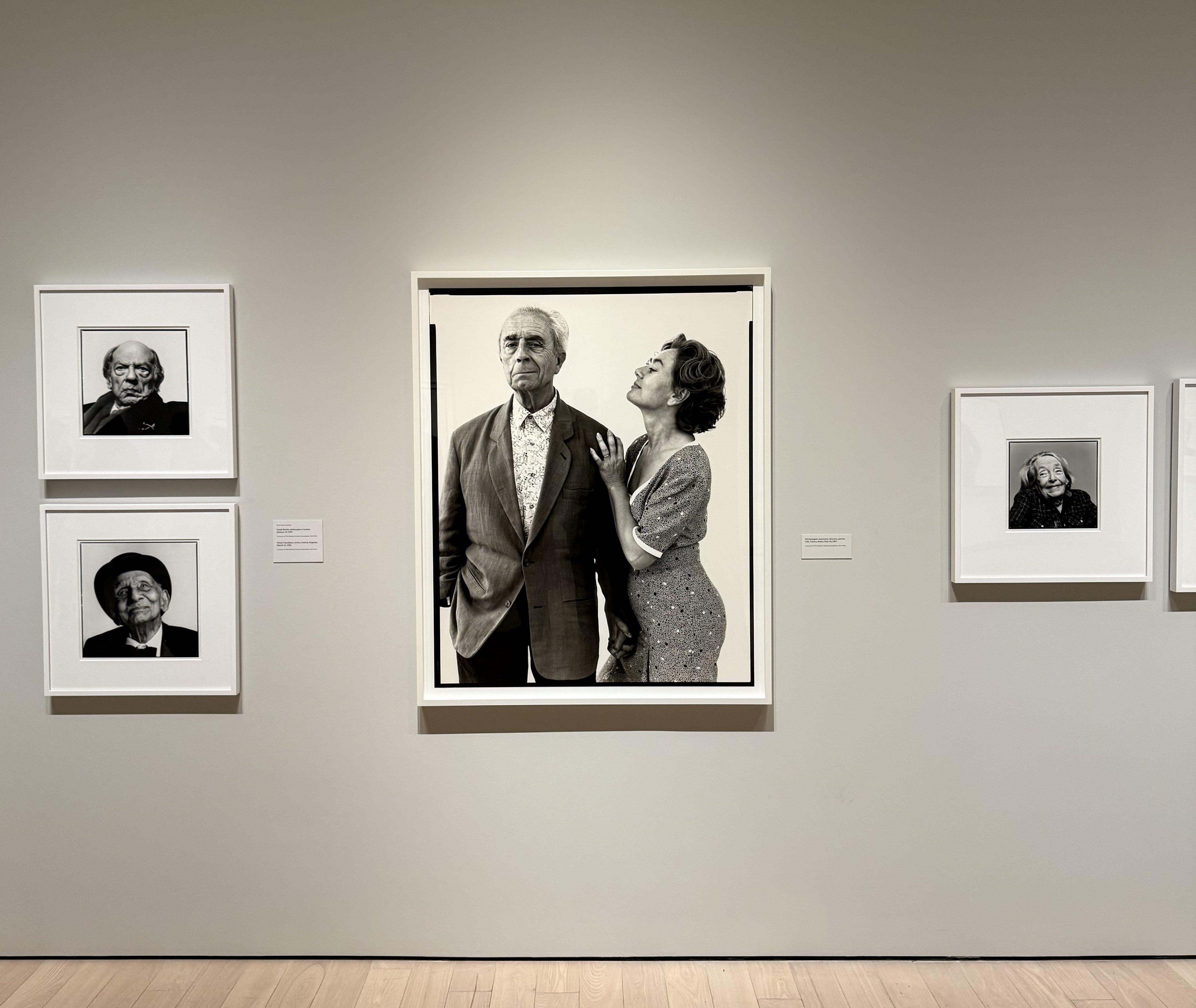
I turned to my partner and said, “Have you seen Antonioni’s film Blow-Up?” She replied, “No, let’s watch it.”
Looking at Avedon’s portrait of the auteur of cinema Antonioni and his wife, I remembered a professor of mine mentioning that in the early days of Ryerson’s (now TMU’s) photography program, the school saw a sharp uptick in applications after Antonioni’s film Blow-Up was released. My mind went back to the lifestyle of a photographer in the 1950s and 1960’s.
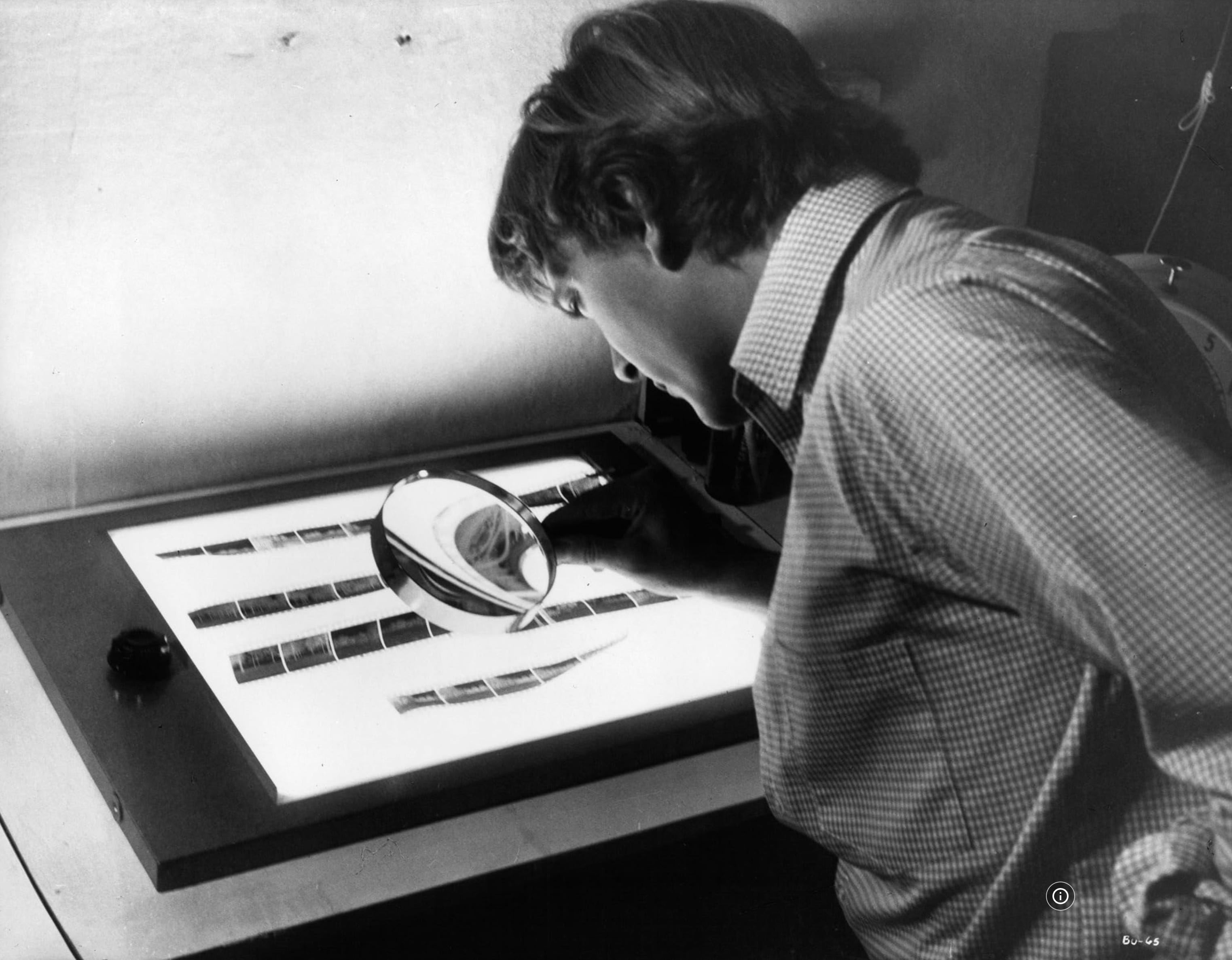
Of course. Isn’t that what Blow-Up is about? It follows a fashion photographer who is dissatisfied with his commercial work and is trying to understand the world around him. He’s working on a photo book about life on the streets of London, sleeps in a homeless shelter to get the photographs, and is constantly distracted by his search for the truth about a murder he photographed with his camera but never witnessed with his own eyes.
What a full circle moment. I highly recommend watching the Avedon documentary and then watching (or rewatching) Blow-Up. Antonioni is quoted as saying the film could easily have taken place in New York or Paris. If it hadn’t been set in London, it could very well have been a film about Avedon and his pursuit of truth through the lens of his camera.
Thank you for reading (and watching) No AI tools were used in the creation of this post. Any grammatical or spelling errors are the result of my career as a professional photographer and filmmaker and not being a writer. ✌️
Support this Newsletter:
If you’ve been enjoying my posts, consider a paid subscription at the bottom tier:
You can also support this newsletter by liking and sharing this post with a friend.
You can also find me on, Instagram / Threads / Vimeo and my portfolio